Photomontage
Also called photo collage, photographic montage, composite photographs, cut-and-assembled photography, scale-shift photo composite
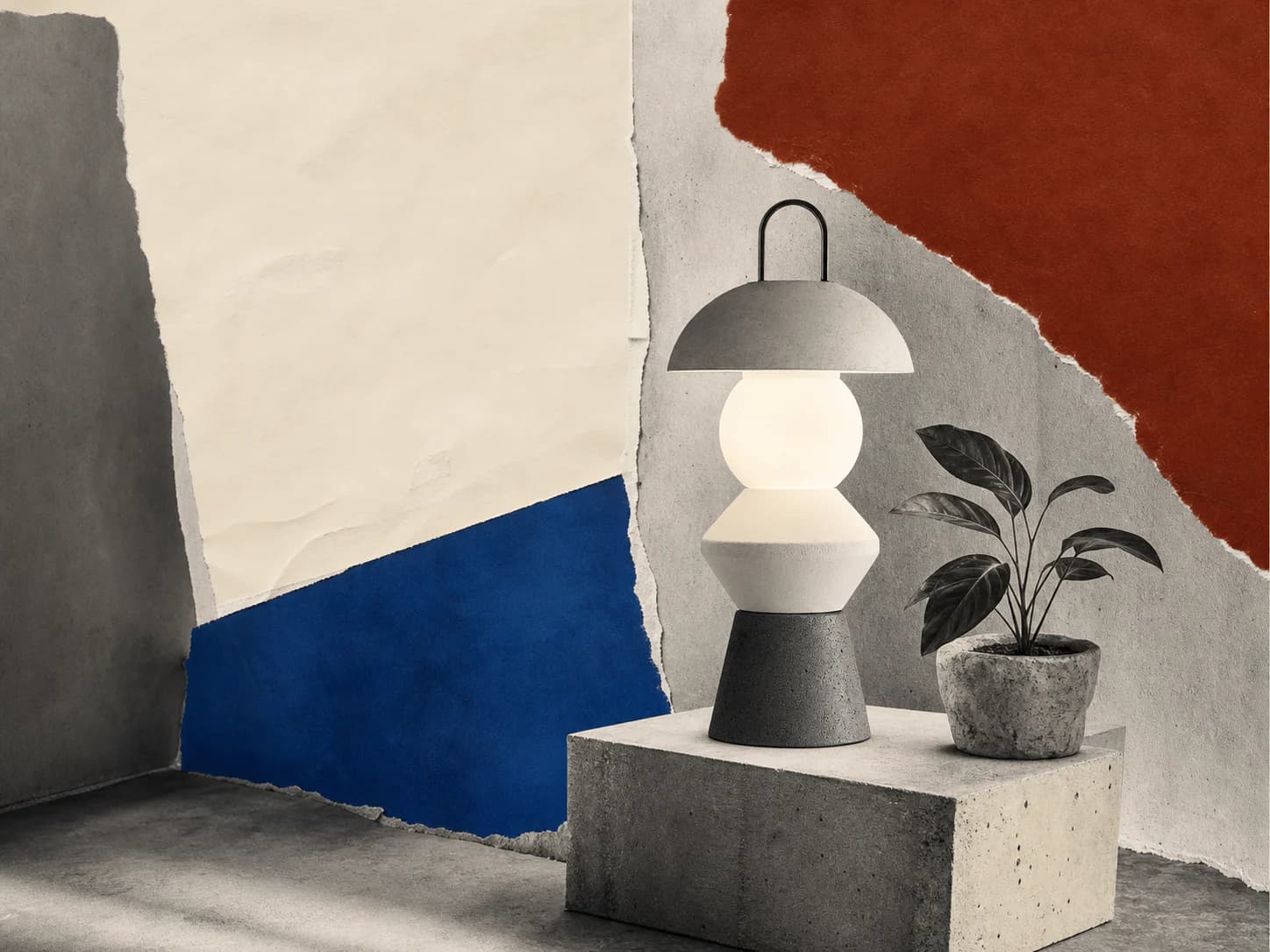
1Photographic fragments cut and reassembled with the joins deliberately visible, so the picture argues rather than documents.
Starting from a real product, person, or object? Keep that reference recognizable. Apply the direction to its setting, supporting elements, composition, light, surfaces, crop, and finish instead of redesigning the subject.
- Made by
- Separate photographic fragments cut out and assembled into one composition, with the joins and the scale changes left visible
- Control
- Prompt + reference — Words get you close; a style reference is what holds a whole set together.
Why it works
What the direction actually buys you when it lands.
- Each fragment keeps photographic credibility while the assembly is obviously constructed, which lets an image make a claim about relationships without pretending to be a document.
- Deliberate scale discontinuity is the whole rhetorical device: putting a hand the size of a building next to a building states a relationship no single photograph could.
- Hard cut edges give the composition a graphic structure, so it holds together as a poster even though every fragment is photographic.
- It handles abstract subject matter — systems, power, scale, consequence — that neither straight photography nor illustration covers well.
What you see
The perceptual fingerprint — check a candidate against these.
- Hard-edged cut boundaries where one photographic fragment ends and another begins
- Deliberate scale discontinuity between elements that would not share a scale in reality
- Fragments carrying different lighting, grain and colour temperature, left unreconciled
- Flat graphic ground or blocks of solid colour between the photographic pieces
- Overlap and layering that reads as physical stacking rather than as a blended composite
Best fit
Where this direction is the right answer.
- Campaign and editorial art about systems, scale, consequence or contradiction
- Culture and social-commentary content where a straight photo would be too literal
- Heroes for brands whose message is about connecting unlike things
- Concept work where illustration would feel too soft and photography too factual
Avoid when
Known-bad conditions. Pick another direction instead.
- The image could be mistaken for documentary evidence — the credibility of the fragments is a liability
- You need product accuracy or a straightforward depiction
- Brand tone is calm, reassuring or institutional
- You cannot establish rights to every source fragment used
Compatibility
How it behaves next to the rest of a design system.
Pairs with
- Bold condensed and grotesque display type
- Solid flat colour blocks as compositional ground
- Full-bleed editorial layouts
- High-contrast kits with a strong single accent
Tension with
- Soft, calm or wellness-oriented positioning
- Gradient and glass surfaces
- Illustrated imagery in the same view
- Dense UI where the complexity has no room
Rights are a hard gate, not a nicety. Every photographic fragment must be owned or licensed, and any real-person likeness needs a release. Record source, creator, licence and intended use for each piece before the asset ships.
Accessibility
What has to be true before this ships to real readers.
- Busy fragment boundaries make text overlay unreliable; place type on a solid block within the composition or beside it
- Scale discontinuity is the content — describe it in alt text, since 'photo collage' tells a screen reader nothing about the argument
- Check that the composition reads at small sizes; montage tends to fragment into noise in a card
- Avoid animating fragments independently, which compounds the visual complexity
Agent tags
The machine-readable handles an agent matches on when it picks a direction.
- photographic
- constructed
- scale-shift
- conceptual
- rights-sensitive
- campaign
- high-complexity
Build payload
ProWhat an agent needs to turn Photomontage into a repeatable production brief: prompt scaffold, constraints, parameters and review.